---
title: Building a Sustainable Future with Responsible Foam Solutions
description: Explore how Sterling Manufacturing is driving sustainability in the foam industry with innovative solutions that reduce waste and carbon emissions.
image: https://solutions.sterlinghouston.com/hubfs/blog-assets/Custom%20foam%20packaging%20600x350.jpg
---
[CALL US TODAY: 713.695.5333](tel:713.695.5333)
[EMAIL US: INFO@STERLINGHOUSTON.COM](mailto:info@sterling.com)
[](https://sterlinghouston.com/)
- [HOME](https://sterlinghouston.com/)
- [About Us](https://sterlinghouston.com/about-us/)
- [Services](https://sterlinghouston.com/services/)
- [Packaging Solutions](https://sterlinghouston.com/packaging-solutions/)
- [Contour cutting](https://sterlinghouston.com/contour-cutting/)
- [Die-Cutting](https://sterlinghouston.com/die-cutting/)
- [Dimensional Cutting](https://sterlinghouston.com/dimensional-cutting/)
- [Laminating & Bonding](https://sterlinghouston.com/laminating-bonding/)
- [Logistic Support](https://sterlinghouston.com/logistic-support/)
- [Convoluting](https://sterlinghouston.com/convoluting/)
- [Products](https://sterlinghouston.com/products/)
- [Foam Cubes](https://sterlinghouston.com/foam-cubes/)
- [Expandable Polystyrene (EPS)](https://sterlinghouston.com/expandable-polystyrene-eps/)
- [Polyurethane Foam (PU)](https://sterlinghouston.com/polyurethane-foam-pu/)
- [Ether](https://sterlinghouston.com/ether/)
- [Ester](https://sterlinghouston.com/ester/)
- [Polyethylene (PE)](https://sterlinghouston.com/polyethylene-pe/)
- [Design & Testing](https://sterlinghouston.com/design-testing/)
- [Contact Us](https://sterlinghouston.com/contact-us/)
- [Blog](https://solutions.sterlinghouston.com/blog)
[REQUEST A SAMPLE BOX](https://sterlinghouston.com/request-a-sample-box/)
[REQUEST A SAMPLE BOX](https://sterlinghouston.com/request-a-sample-box/)
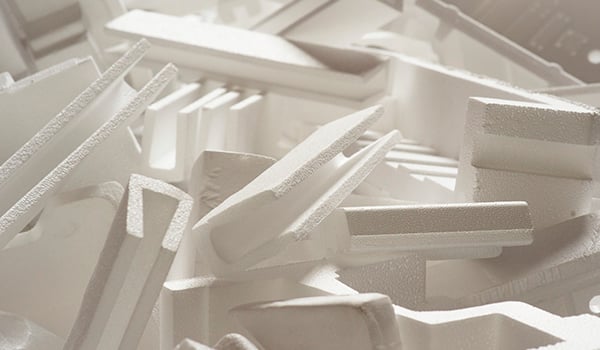
# Building a Sustainable Future with Responsible Foam Solutions
[Leave a Comment](https://solutions.sterlinghouston.com/blog/building-a-sustainable-future-with-responsible-foam-solutions#reply-title) / [EPS](https://solutions.sterlinghouston.com/blog/tag/eps), [Foam Solutions](https://solutions.sterlinghouston.com/blog/tag/foam-solutions), [Recycling](https://solutions.sterlinghouston.com/blog/tag/recycling), [Polyurethane Foam](https://solutions.sterlinghouston.com/blog/tag/polyurethane-foam), [Award](https://solutions.sterlinghouston.com/blog/tag/award), [Custom foam](https://solutions.sterlinghouston.com/blog/tag/custom-foam), [Polyethylene Foam](https://solutions.sterlinghouston.com/blog/tag/polyethylene-foam), [Polyethylene](https://solutions.sterlinghouston.com/blog/tag/polyethylene), [Sustainability](https://solutions.sterlinghouston.com/blog/tag/sustainability) / [By Sterling Marketing](https://solutions.sterlinghouston.com/blog/author/sterling-marketing)
Sustainability has become an increasingly important priority across nearly every industry. Manufacturers, distributors, retailers and consumers are looking more closely at how products are made, how materials are sourced and what happens to those materials at the end of their useful lives.
For companies working with foam and protective packaging, these conversations are especially important.
Foam materials play an essential role in protecting products, improving energy efficiency, absorbing impact and supporting applications across industries ranging from automotive and electronics to construction, medical equipment and oil and gas. At the same time, manufacturers have an opportunity to find smarter ways to reduce waste, incorporate recycled materials and minimize the environmental impact associated with their operations.
At Sterling Manufacturing & Distributing, sustainability is more than a conversation. It is an ongoing effort that has already produced measurable results.
## **Recognized for Reducing Carbon Emissions**
Sterling Manufacturing [was honored with the Pregis Renew Award](https://solutions.sterlinghouston.com/blog/sterling-wins-pregis-award-for-cutting-100-mt-of-emissions-in-2024?_gl=1*byk5o*_ga*NDEyMjkzOTU4LjE3ODYwNDI3Njk.*_ga_7K8RLN06HH*czE3ODY0Njk3MDAkbzIkZzAkdDE3ODY0Njk3MDAkajYwJGwwJGgw) for its commitment to reducing carbon emissions through sustainable packaging solutions.
By providing customers with Pregis Renew™ solutions containing recycled content, Sterling helped reduce more than 100 metric tons of carbon emissions in 2024.
That reduction is environmentally comparable to approximately:
- 3 tons of waste recycled instead of landfilled
- 111,081 pounds of coal burned
- 11,252 gallons of diesel fuel consumed
Receiving the Pregis Renew Award demonstrates what can happen when manufacturers, suppliers and customers work together to make sustainability part of everyday purchasing and production decisions.
Rather than treating environmental responsibility as a separate initiative, manufacturers can incorporate it directly into the materials and solutions they provide customers.
## **Why Sustainability Matters in the Foam Industry**
Foam is an incredibly versatile material. Polyurethane, polyethylene, expanded polystyrene and other foam products provide cushioning, insulation, vibration control, protection and structural support for countless applications.
Sterling has spent more than 50 years designing and manufacturing custom foam products for customers around the world, working with a variety of materials and fabrication processes.
As demand for foam continues, however, manufacturers must also consider how materials are produced, fabricated, transported, reused and ultimately discarded.
Reducing manufacturing waste is one important piece of that puzzle. When custom foam components are engineered around the dimensions and performance requirements of a specific product, manufacturers may be able to optimize the amount of material required while still providing the necessary protection.
Durability can also contribute to sustainability. Packaging that effectively protects a product can reduce damage during shipping, potentially preventing the additional materials, transportation and resources associated with replacing damaged products.
Sustainability, therefore, is not simply about using less material. It is about using materials intelligently.
## **Recycling is Changing the Future of Foam**
One of the most promising areas of sustainability within the foam industry is the continued advancement of recycling technologies.
Polyurethane foam has traditionally presented recycling challenges because of its chemical structure, but new technologies are opening additional possibilities for recovering and reusing materials.
For example, a 2026 study [examining closed-loop polyurethane recycling](https://www.sciencedirect.com/science/article/abs/pii/S0921344925006342) demonstrated that recycled polyols produced from waste polyurethane foam could replace up to 40% of virgin polyol in newly manufactured rigid polyurethane foam. The study found that the recycled polyols reduced global warming potential by approximately 40% compared with virgin products.
Advancements like these demonstrate the potential for a more circular foam economy in which valuable materials are recovered rather than automatically becoming waste.
Recycling is also becoming an increasingly important consideration throughout foam production and fabrication. Manufacturers can evaluate opportunities to minimize scrap, reuse suitable materials and work with suppliers that offer recycled-content options.
Every improvement contributes to a larger goal: *getting more value from existing resources.*
## **Sustainable Materials Can Still Deliver Performance**
Environmental responsibility cannot come at the expense of product performance. Packaging still needs to protect products. Insulation still needs to insulate. Cushioning still needs to absorb impact.
The goal is to find solutions that accomplish both.
[Sterling works with multiple types of foam](https://sterlinghouston.com/products/), allowing materials to be selected according to the requirements of each application. The company supplies polyurethane foam for applications including furniture, bedding, automotive, electronics, acoustics and oil and gas. Advanced blowing-agent technologies can help enhance the performance and sustainability of polyurethane foam while meeting environmental standards.
Expanded polystyrene or EPS, provides another example. EPS is recyclable and can be reused and repurposed, while its insulation properties can contribute to energy savings in applications such as building construction and refrigeration.
Selecting the appropriate material for an application can therefore help balance performance, cost and environmental considerations.
## **Custom Engineering Can Help Reduce Waste**
One of the most valuable sustainability tools manufacturers have is thoughtful product design.
Consider protective packaging. An oversized package containing excessive material does not necessarily provide better protection. In some cases, it simply increases material consumption, shipping volume and cost.
Custom foam fabrication provides an opportunity to take a more precise approach.
[Sterling offers services including](https://sterlinghouston.com/services/) dimensional cutting, contour cutting, laminating and bonding, die-cutting and convoluting. These capabilities allow foam components to be designed around specific product dimensions and performance requirements.
A well-engineered packaging solution can potentially use material more efficiently while still delivering the cushioning and protection required during storage and transportation.
There can also be downstream benefits. Packaging designed to prevent damage helps avoid product returns and replacements, both of which can require additional transportation, packaging and manufacturing resources.
In other words, protecting the product itself can be part of protecting resources.
## **Sustainability is Increasingly a Business Priority**
Environmental responsibility is no longer solely an internal manufacturing concern.
Customers are increasingly asking suppliers about recycled content, waste reduction, emissions and sustainable packaging options. Many organizations have established their own environmental or sustainability goals, which means the companies within their supply chains can play an important role in helping achieve them.
For foam fabricators, this creates an opportunity to become more than a supplier.
Manufacturers with knowledge of different materials, fabrication methods and packaging designs can help customers evaluate solutions based on several factors at once: protection, performance, cost, efficiency and environmental impact.
Sterling’s Pregis Renew Award is particularly meaningful in this context because the reduction of more than 100 metric tons of carbon emissions was achieved through solutions delivered to customers.
Sustainability became a shared achievement.
## **Continuing to Build a More Responsible Foam Industry**
The foam industry is not going to transform overnight. Materials must continue meeting demanding requirements for durability, cushioning, insulation, safety and protection.
But sustainability does not require choosing between performance and environmental responsibility. It requires continuous improvement.
Advances in recycling technology, increased availability of recycled-content materials, more efficient fabrication processes and thoughtful product engineering are giving manufacturers new ways to reduce environmental impacts while continuing to meet customer needs.
Sterling Manufacturing’s recognition with the Pregis Renew Award demonstrates that these efforts can produce measurable results. Helping reduce more than 100 metric tons of carbon emissions in a single year is an important milestone, but it also represents something larger: the potential impact manufacturers and customers can create when they make sustainability part of how they do business.
With more than five decades of experience in custom foam fabrication and packaging, Sterling continues to combine material expertise, engineering capabilities and responsible solutions to help customers protect their products while working toward a more sustainable future.
## **Find the Right Foam Solution for Your Business**
Whether your goal is to improve product protection, reduce packaging waste, explore recycled-content options or develop a more efficient custom foam solution, Sterling Manufacturing can help.
Our team works with customers to develop foam and packaging solutions tailored to specific products, applications and performance requirements.
Ready to explore a smarter, more sustainable approach to foam and protective packaging? [Contact Sterling Manufacturing today](https://sterlinghouston.com/contact-us/) to discuss your application and discover a custom solution designed around your needs.
[← Previous Post](https://solutions.sterlinghouston.com/blog/how-different-markets-use-engineered-foam-solutions)
### Leave a Comment
Your email address will not be published. Required fields are marked \*
This is a search field with an auto-suggest feature attached.
- There are no suggestions because the search field is empty.
###### Recent Posts
[How Different Markets Use Engineered Foam Solutions](https://solutions.sterlinghouston.com/blog/how-different-markets-use-engineered-foam-solutions)
[Why Anti-Static Foam is Essential for Electronics Packaging](https://solutions.sterlinghouston.com/blog/why-anti-static-foam-is-essential-for-electronics-packaging)
[Foam’s Favorite Applications](https://solutions.sterlinghouston.com/blog/foams-favorite-applications)
[Recycling’s Expanding Role in Foam Production and Fabrication](https://solutions.sterlinghouston.com/blog/recyclings-expanding-role-in-foam-production-and-fabrication)
[The Role of Polyethylene Foam in Offshore and Subsea Operations](https://solutions.sterlinghouston.com/blog/the-role-of-polyethylene-foam-in-offshore-and-subsea-operations)
[Foam Solutions for Oil & Gas Industry Applications](https://solutions.sterlinghouston.com/blog/foam-solutions-for-oil-gas-industry)
###### Categories
- [Foam Solutions](https://solutions.sterlinghouston.com/blog/tag/foam-solutions)
- [Packaging](https://solutions.sterlinghouston.com/blog/tag/packaging)
- [EPS](https://solutions.sterlinghouston.com/blog/tag/eps)
- [General](https://solutions.sterlinghouston.com/blog/tag/general)
- [Shipping](https://solutions.sterlinghouston.com/blog/tag/shipping)
- [Custom foam](https://solutions.sterlinghouston.com/blog/tag/custom-foam)
- [Medical](https://solutions.sterlinghouston.com/blog/tag/medical)
- [Athletics](https://solutions.sterlinghouston.com/blog/tag/athletics)
- [Oil & Gas](https://solutions.sterlinghouston.com/blog/tag/oil-gas)
- [Automotive](https://solutions.sterlinghouston.com/blog/tag/automotive)
- [Die-Cutting](https://solutions.sterlinghouston.com/blog/tag/die-cutting)
- [Polyurethane Foam](https://solutions.sterlinghouston.com/blog/tag/polyurethane-foam)
- [Construction](https://solutions.sterlinghouston.com/blog/tag/construction)
- [Electronics](https://solutions.sterlinghouston.com/blog/tag/electronics)
- [Fabrication](https://solutions.sterlinghouston.com/blog/tag/fabrication)
- [Safety](https://solutions.sterlinghouston.com/blog/tag/safety)
- [Polyethylene Foam](https://solutions.sterlinghouston.com/blog/tag/polyethylene-foam)
- [Foam acoustic solutions](https://solutions.sterlinghouston.com/blog/tag/foam-acoustic-solutions)
- [Manufacturing](https://solutions.sterlinghouston.com/blog/tag/manufacturing)
- [Military and Defense](https://solutions.sterlinghouston.com/blog/tag/military-and-defense)
- [Award](https://solutions.sterlinghouston.com/blog/tag/award)
- [Foam Inserts](https://solutions.sterlinghouston.com/blog/tag/foam-inserts)
- [News](https://solutions.sterlinghouston.com/blog/tag/news)
- [Recycling](https://solutions.sterlinghouston.com/blog/tag/recycling)
- [Contour](https://solutions.sterlinghouston.com/blog/tag/contour)
- [Furniture](https://solutions.sterlinghouston.com/blog/tag/furniture)
- [Pipeline Insulation](https://solutions.sterlinghouston.com/blog/tag/pipeline-insulation)
- [Polyethylene](https://solutions.sterlinghouston.com/blog/tag/polyethylene)
- [Supply Chain](https://solutions.sterlinghouston.com/blog/tag/supply-chain)
- [Aerospace](https://solutions.sterlinghouston.com/blog/tag/aerospace)
- [CNC Cutting](https://solutions.sterlinghouston.com/blog/tag/cnc-cutting)
- [EVA](https://solutions.sterlinghouston.com/blog/tag/eva)
- [Industrial](https://solutions.sterlinghouston.com/blog/tag/industrial)
- [Performance](https://solutions.sterlinghouston.com/blog/tag/performance)
- [Polystyrene Sheets](https://solutions.sterlinghouston.com/blog/tag/polystyrene-sheets)
- [Recreation](https://solutions.sterlinghouston.com/blog/tag/recreation)
- [Styrofoam Sheets](https://solutions.sterlinghouston.com/blog/tag/styrofoam-sheets)
- [Sustainability](https://solutions.sterlinghouston.com/blog/tag/sustainability)
Copyright © 2026 Sterling Manufacturing & Distributing. All Rights Reserved.
```json
{
"@context" : "https://schema.org",
"@type" : "BlogPosting",
"author" : {
"@type" : "Person",
"name" : "Sterling Marketing",
"url" : "https://solutions.sterlinghouston.com/blog/author/sterling-marketing"
},
"dateModified" : "2026-08-13T16:48:28.650Z",
"datePublished" : "2026-08-13T16:47:33.000Z",
"headline" : "Building a Sustainable Future with Responsible Foam Solutions",
"image" : [ "https://solutions.sterlinghouston.com/hubfs/blog-assets/Custom%20foam%20packaging%20600x350.jpg" ],
"mainEntityOfPage" : {
"@id" : "https://solutions.sterlinghouston.com/blog/building-a-sustainable-future-with-responsible-foam-solutions",
"@type" : "WebPage"
},
"publisher" : {
"@type" : "Organization",
"logo" : {
"@type" : "ImageObject",
"url" : "https://solutions.sterlinghouston.com/hubfs/img/sterline-logo.png"
},
"name" : "Sterling Manufacturing & Distribution"
}
}
```