
Polystyrene Sheets vs. Other Foam Types: A Full Comparison
Choosing the right foam material isn’t just a technical decision, it’s a choice that determines how well your products perform, how long they last and even how much they cost to produce. In industries like packaging, insulation and custom fabrication, foam sheets come in several types, each with unique strengths.
At the top of that list are three industry favorites: EPS (expanded polystyrene), PU (polyurethane) and PE (polyethylene). Each material has its place — but the best choice depends on what matters most: strength, flexibility, insulation or cost-efficiency.
At Sterling Manufacturing & Distributing, Houston’s trusted full-service foam manufacturer, we help businesses across Texas and beyond choose the right foam for every application.
Below, we take a closer look at how EPS foam stacks up against PU and PE across key categories: strength, flexibility, cost, performance and more.
What are Polystyrene Sheets (EPS Foam)?
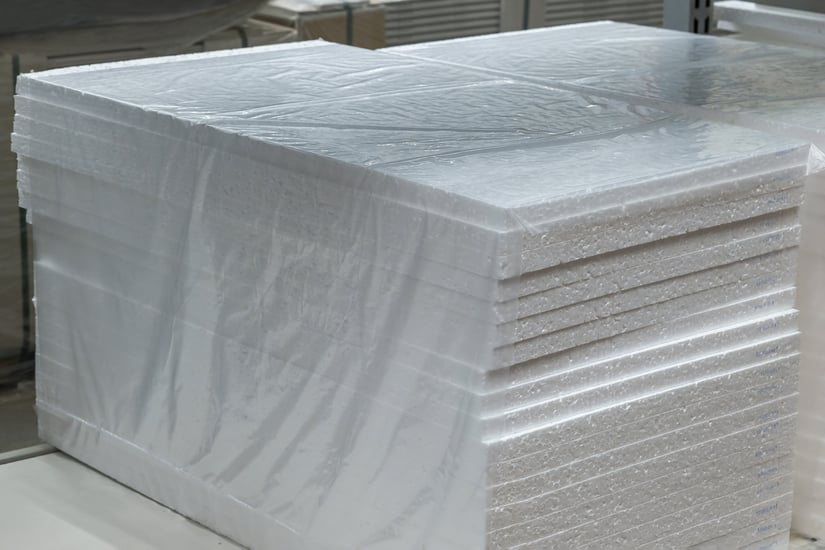
Expanded Polystyrene (EPS) is a lightweight, rigid, closed-cell foam made from small polystyrene beads that are expanded and fused together. The result is a firm, stable material known for its excellent insulation, cushioning and impact resistance.
Because it’s easy to shape, cut and fabricate, EPS is one of the most common materials used in:
- Protective packaging for electronics, appliances and medical devices
- Architectural insulation panels and construction applications
- Cold storage and shipping for temperature-sensitive goods
- Displays, signage and custom forms
At Sterling, our EPS foam sheets are custom cut and fabricated to meet exact project requirements — whether you need lightweight packaging inserts or large-format construction insulation boards.
EPS Foam vs. Polyurethane Foam (PU)
Polyurethane foam, or PU, is another common foam material that differs significantly from polystyrene in texture, structure and performance. PU is a soft, open-cell foam, meaning it’s flexible and compressible rather than rigid. (Note: PU can also be formulated as rigid closed-cell foam used in spray or panel insulation).
Key differences:
| Property | EPS (Polystyrene) | PU (Polyurethane) |
| Structure | Closed-cell, rigid | Usually open-cell, soft and flexible |
| Density Range | 1–3 lbs/ft³ (lightweight) | 1–10 lbs/ft³ (varies widely) |
| Compression Recovery | Limited (rigid) | Excellent (bounces back) |
| Thermal Insulation | Excellent at low cost | Higher (for rigid PU) at higher price point/Moderate (for flexible PU) |
| Water Absorption | Low | Higher (open-cell PU absorbs moisture) |
| Typical Uses | Packaging, insulation, construction | Cushioning, upholstery, soundproofing |
When to choose EPS over PU:
- When rigid structure and shape retention are important (e.g., protective packaging, molded forms).
- When thermal insulation is a key requirement, such as in building envelopes or refrigerated transport.
- When budget and recyclability matter — EPS is typically more affordable and easier to recycle.
When PU might be better:
- For soft cushioning applications like seating, bedding or vibration damping
- When comfort and resilience outweigh rigidity needs
In short: EPS delivers structure; PU delivers softness
EPS Foam vs. Polyethylene Foam (PE)
Polyethylene foam, or PE, falls between EPS and PU in terms of firmness and flexibility. It’s a closed-cell foam, like EPS, but with more elasticity and resilience. PE foam is highly resistant to moisture, chemicals and impact — making it a top choice for reusable packaging and industrial applications.
Comparison overview:
| Property | EPS (Polystyrene) | PE (Polyethylene) |
| Structure | Closed-cell, rigid | Closed-cell, semi-rigid and flexible |
| Shock Absorption | Moderate | Excellent |
| Moisture Resistance | High | Very high |
| Reusability | Moderate (can crack under stress) | High (durable and long-lasting) |
| Cost | Lower | Higher |
| Recyclability | Widely recyclable | Recyclable in some streams |
When EPS shines:
- For one-time packaging or bulk insulation needs where cost-efficiency is critical
- When products don’t require repeated use or compression cycles
When PE wins:
- For long-term or reusable packaging systems where flexibility and durability pay off
- For moisture-prone environments like marine or outdoor equipment packaging
Put simply, EPS offers the best value for rigid protection, while PE delivers superior performance for rugged, reusable applications.
EPS Foam’s Key Advantages
Polystyrene sheets have remained a mainstay of the foam industry for decades because of their balanced combination of performance, cost and versatility. Here are a few reasons why EPS continues to be a top choice across industries:
- Lightweight strength: High compressive strength despite low weight
- Excellent insulation: Ideal for temperature control in buildings and cold-chain shipping
- Customizable fabrication: Easily cut, shaped and laminated to fit unique product designs
- Cost-effective: Among the most economical foam materials available
- Environmentally conscious: 100 percent recyclable through both mechanical and chemical processes such as densification, remolding, or solvent-based recycling and often made from partially recycled content
At Sterling Manufacturing & Distributing, our EPS foam sheets are produced with precision equipment to ensure consistent density, smooth surface quality and dimensional accuracy for every project.
Choosing the Right Foam for Your Application
Each foam type brings something unique to the table. The key is matching your application’s performance and cost requirements with the right material characteristics.
| Application | Best Foam Type | Why |
| Protective packaging (one-time use) | EPS | Lightweight, cost-effective and rigid protection |
| Reusable packaging / cases | PE | Flexible, moisture-resistant and durable |
| Cushioning and upholstery | PU | Soft, resilient and comfortable |
| Construction insulation | EPS | Excellent R-value and dimensional stability |
| Industrial components | PE | Strong impact resistance and reusability |
Not sure which foam suits your needs? Sterling’s experienced team can evaluate your design specifications — such as weight, fragility, exposure to moisture and reusability — to recommend the right fit.
Why Partner with Sterling Manufacturing & Distributing
As a full-service foam manufacturer based in Houston, Texas, Sterling has more than five decades of experience helping clients across industries get the right foam solution — on time and on budget.
Our capabilities include:
- Custom fabrication: Die cutting, contour cutting, laminating and bonding
- Design assistance: Expert guidance on material selection, thickness and density
- Rapid prototyping: Sample parts and test runs before full production
- Diverse inventory: EPS, PU and PE foams in a range of sizes and densities
From packaging distributors and builders to OEM manufacturers, Sterling’s clients trust us for quality foam products backed by dependable service.
Request a Foam Sample Box
Nothing beats seeing and feeling the difference between foam types firsthand.
That’s why Sterling offers a sample box — featuring examples of our EPS, PE and PU foams — so you can compare materials side-by-side before you buy.
Experience the Sterling difference in quality, precision and customer care trusted by Texas manufacturers and builders for over 50 years.
Summary Table: EPS vs. PU vs. PE
| Feature | EPS (Polystyrene Sheets) | PU (Polyurethane Foam) | PE (Polyethylene Foam) |
| Structure | Rigid, closed-cell | Soft, open-cell | Flexible, closed-cell |
| Durability | Moderate | Moderate | High |
| Insulation | Excellent | Fair | Good |
| Shock Absorption | Moderate | Good | Excellent |
| Water Resistance | High | Low | Very High |
| Reusability | Limited | High | High |
| Cost | Low | Medium | High |
| Best Use | Packaging, insulation, construction | Cushioning, seating | Reusable packaging, industrial use |
Foam Isn’t One-Size-Fits-All
Foam isn’t one-size-fits-all — and that’s a good thing.
Whether your project calls for lightweight rigidity, long-term durability, or soft cushioning, understanding the differences between polystyrene sheets, polyurethane and polyethylene foams can help you make the most cost-effective and performance-driven decision.
For local support, fast turnaround and proven expertise, partner with Sterling Manufacturing & Distributing — Houston’s trusted source for custom foam solutions. Contact us today to get started on your project.
Leave a Comment
Your email address will not be published.