---
title: Why Anti-Static Foam is Essential for Electronics Packaging
description: Discover the importance of anti-static foam in protecting sensitive electronics from electrostatic discharge during manufacturing, storage and shipping.
image: https://solutions.sterlinghouston.com/hubfs/blog-assets/Electronics-anti-static-foam-600x350.jpg
---
[CALL US TODAY: 713.695.5333](tel:713.695.5333)
[EMAIL US: INFO@STERLINGHOUSTON.COM](mailto:info@sterling.com)
[](https://sterlinghouston.com/)
- [HOME](https://sterlinghouston.com/)
- [About Us](https://sterlinghouston.com/about-us/)
- [Services](https://sterlinghouston.com/services/)
- [Packaging Solutions](https://sterlinghouston.com/packaging-solutions/)
- [Contour cutting](https://sterlinghouston.com/contour-cutting/)
- [Die-Cutting](https://sterlinghouston.com/die-cutting/)
- [Dimensional Cutting](https://sterlinghouston.com/dimensional-cutting/)
- [Laminating & Bonding](https://sterlinghouston.com/laminating-bonding/)
- [Logistic Support](https://sterlinghouston.com/logistic-support/)
- [Convoluting](https://sterlinghouston.com/convoluting/)
- [Products](https://sterlinghouston.com/products/)
- [Foam Cubes](https://sterlinghouston.com/foam-cubes/)
- [Expandable Polystyrene (EPS)](https://sterlinghouston.com/expandable-polystyrene-eps/)
- [Polyurethane Foam (PU)](https://sterlinghouston.com/polyurethane-foam-pu/)
- [Ether](https://sterlinghouston.com/ether/)
- [Ester](https://sterlinghouston.com/ester/)
- [Polyethylene (PE)](https://sterlinghouston.com/polyethylene-pe/)
- [Design & Testing](https://sterlinghouston.com/design-testing/)
- [Contact Us](https://sterlinghouston.com/contact-us/)
- [Blog](https://solutions.sterlinghouston.com/blog)
[REQUEST A SAMPLE BOX](https://sterlinghouston.com/request-a-sample-box/)
[REQUEST A SAMPLE BOX](https://sterlinghouston.com/request-a-sample-box/)
# Why Anti-Static Foam is Essential for Electronics Packaging
[Leave a Comment](https://solutions.sterlinghouston.com/blog/why-anti-static-foam-is-essential-for-electronics-packaging#reply-title) / [Packaging](https://solutions.sterlinghouston.com/blog/tag/packaging), [Electronics](https://solutions.sterlinghouston.com/blog/tag/electronics), [Foam Solutions](https://solutions.sterlinghouston.com/blog/tag/foam-solutions), [Shipping](https://solutions.sterlinghouston.com/blog/tag/shipping) / [By Sterling Marketing](https://solutions.sterlinghouston.com/blog/author/sterling-marketing)
Protecting sensitive electronics during manufacturing, storage and shipping is more important than ever. Even the smallest electrical discharge can damage today’s compact, powerful and fragile components, resulting in costly failures and returns.
Anti-static foam is a critical solution for electronics packaging. It prevents electrostatic discharge (ESD) and cushions delicate components throughout the supply chain.
For electronics manufacturers, semiconductor companies and tech startups, choosing the right packaging material is not just about shipping. It’s about protecting product integrity, performance and brand reputation.
## **The Growing Risk of Electrostatic Discharge (ESD)**
Electrostatic discharge occurs when static electricity suddenly transfers between two objects with different electrical potentials. This type of discharge is surprisingly common and can occur simply from friction between materials, human contact or environmental factors during handling or transportation.
Unfortunately, even a small amount of static electricity can damage sensitive electronics.
Studies show that some microelectronic components can be damaged by [electrostatic discharge as low as 20 volts](https://irp.fas.org/doddir/usaf/aia/i20-0112.htm#:~:text=1.1.,life%20cycle%20of%20the%20equipment.), a level far below what humans can feel.
For comparison, a person walking across a carpet can easily generate thousands of volts of static electricity. When this charge is released onto a sensitive device, it can cause:
- Immediate component failure
- Latent damage that appears later in the product’s lifecycle
- Data corruption or malfunction
- Reduced device reliability
Electrostatic discharge damage can occur anywhere in the supply chain, from manufacturing floors to warehouses and transportation environments.
As electronics continue to shrink in size and increase in complexity, their sensitivity to ESD becomes even greater. This growing vulnerability makes proper protective packaging essential.
## **What is Anti-Static Foam?**
Anti-static foam is a specialized packaging material designed to prevent the buildup and release of static electricity while also protecting delicate components from physical damage.
Typically made from [polyurethane or polyethylene](https://sterlinghouston.com/products/) materials infused with anti-static additives, the foam allows static charges to dissipate safely rather than building up and discharging suddenly.
This controlled dissipation prevents electrostatic shocks from reaching the electronics inside the packaging.
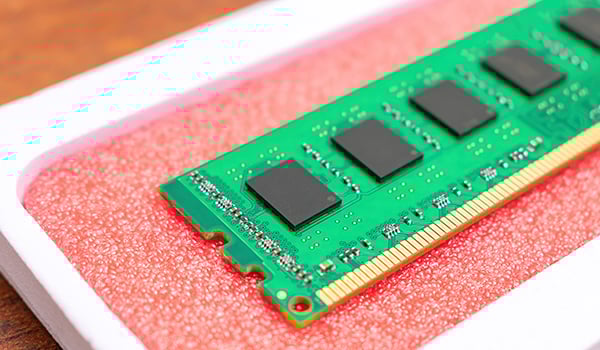
Anti-static foam is widely recognized by its distinctive pink color, which signals that it is safe for handling sensitive electronic components.
In addition to static protection, anti-static foam provides:
- Shock absorption
- Vibration resistance
- Lightweight protection
- Customizable shapes and inserts
These properties make it one of the most versatile and reliable packaging materials for electronics manufacturers.
## **How Anti-Static Foam Protects Electronic Components**
Anti-static foam works by preventing the buildup of static charges and allowing any charges that do occur to dissipate safely over time.
The foam’s surface resistivity typically falls within a range that prevents electrical buildup while avoiding the risk of direct conduction. This means it controls static electricity without introducing new electrical risks to sensitive devices.
The protection process involves several key mechanisms:
##### **Static Charge Prevention**
Anti-static additives reduce the likelihood of static electricity forming when materials rub against each other. These additives make the foam slightly conductive, allowing charges to disperse instead of accumulating.
##### **Controlled Charge Dissipation**
Instead of allowing static energy to be released suddenly, anti-static foam dissipates charges gradually. This controlled release prevents damaging electrostatic shocks.
##### **Physical Cushioning**
In addition to electrical protection, anti-static foam acts as a physical barrier against mechanical hazards such as:
- Drops
- Vibrations
- Compression
- Shipping impacts
This dual protection is essential for electronics that may travel long distances before reaching their final destination.
## **Why Electronics Manufacturers Rely on Anti-Static Foam**
Electronics companies around the world rely on anti-static foam for several key reasons.
##### **1. Protection Against Costly Product Failures**
Electrostatic discharge can cause immediate failure or hidden damage that appears later in the field. This type of latent failure is especially dangerous because products may pass testing but fail after installation.
Packaging solutions like anti-static foam help minimize these risks.
##### **2. Safe Transportation of Sensitive Components**
Microchips, circuit boards and semiconductors are extremely sensitive to electrical charges. Anti-static foam protects these components during:
- Shipping
- Storage
- Assembly
- Field transport
By stabilizing components and controlling static buildup, anti-static foam reduces the chance of damage during handling.
##### 3. Precision Customization
Anti-static foam can be custom [die-cut](https://sterlinghouston.com/die-cutting/) or [contour cut](https://sterlinghouston.com/contour-cutting/) to fit specific components. This creates a secure fit that prevents movement and reduces the risk of impact damage during transportation.
Custom packaging solutions are especially valuable for high-value electronics or complex assemblies.
##### **4. Lightweight and Cost-Effective Protection**
Compared to other packaging materials, foam provides excellent protection with minimal weight. This helps reduce shipping costs while maintaining high protection standards.
Because anti-static foam lowers the risk of product damage, it can also reduce returns, repairs and warranty claims, saving manufacturers money across the supply chain.
## **Industries That Depend on Anti-Static Foam**
While anti-static foam is commonly associated with electronics manufacturing, its applications extend across many industries where sensitive electronic components are used.
##### **Semiconductor Manufacturing**
Microchips and integrated circuits require careful protection during storage and shipping. Anti-static foam keeps everything safe during transportation and helps maintain the company’s integrity before installation.
##### **Consumer Electronics**
Smartphones, laptops, tablets and gaming devices all contain delicate electronic assemblies that require ESD-safe packaging.
##### **Aerospace and Defense**
Advanced avionics systems and communication equipment rely on high-performance electronic components that must remain free from static damage.
##### **Medical Technology**
Medical devices often include highly sensitive electronics used in diagnostic equipment and patient monitoring systems.
##### **Automotive Electronics**
Modern vehicles rely on dozens of electronic control units (ECUs), sensors and navigation systems, all of which benefit from anti-static packaging protection.
## **Anti-Static Foam vs. Other Packaging Materials**
Traditional packaging materials like standard foam or bubble wrap may provide cushioning, but they often do not address electrostatic risks.
In contrast, anti-static foam offers both mechanical protection and electrostatic control, making it the preferred option for electronics packaging.
##### **Key advantages include:**
| **Feature** | **Standard Foam** | **Anti-Static Foam** |
| --- | --- | --- |
| Static Protection | No | Yes |
| Shock Absorption | Yes | Yes |
| Custom Cutting | Yes | Yes |
| Electronics Safety | Limited | Excellent |
Because static electricity can damage components without leaving visible evidence, packaging that addresses ESD risk is essential for quality control.
## **The Future of Electronics Packaging**
As technology continues to evolve, electronics are becoming smaller, faster and more sensitive. This trend is increasing the importance of ESD-safe packaging materials.
With industries like artificial intelligence, robotics and advanced semiconductor manufacturing growing rapidly, the demand for protective packaging solutions such as anti-static foam will continue to rise.
Companies that invest in proper packaging protection not only safeguard their products but also strengthen their supply-chain reliability and customer trust.
## **Partnering with the Right Foam Packaging Manufacturer**
Choosing the right anti-static foam solution requires more than simply selecting a material. It requires expertise in packaging design, material performance and the specific needs of electronic components.
Custom foam solutions can be engineered to:
- Fit complex electronics precisely
- Prevent static buildup
- Reduce vibration and impact damage
- Improve shipping efficiency
For electronics manufacturers, working with an experienced foam manufacturer ensures that packaging performs as intended throughout the product lifecycle.
## **Protect Sensitive Electronics with Anti-Static Foam Solutions**
Electrostatic discharge remains one of the most overlooked threats in electronics manufacturing and logistics. With components becoming increasingly sensitive, protective packaging is no longer optional; it’s essential.
Anti-static foam provides a reliable way to prevent ESD damage while also cushioning fragile electronics during transportation and handling. Combining electrical safety with physical protection helps manufacturers maintain product quality, reduce costly failures and protect their reputation.
Sterling Manufacturing & Distributing specializes in high-performance foam packaging solutions designed to protect sensitive electronics. From custom anti-static foam inserts to precision-cut packaging systems, Sterling works with manufacturers across industries to deliver dependable protection for delicate components. [Contact Sterling](https://sterlinghouston.com/contact-us/) today to learn how our anti-static foam solutions can safeguard your products.
[← Previous Post](https://solutions.sterlinghouston.com/blog/eps-foam-sterlings-packaging-powerhouse-for-tough-shipments)
[Next Post →](https://solutions.sterlinghouston.com/blog/what-is-cushioning-design-and-why-it-matters-in-protective-packaging)
### Leave a Comment
Your email address will not be published. Required fields are marked \*
This is a search field with an auto-suggest feature attached.
- There are no suggestions because the search field is empty.
###### Recent Posts
[How Different Markets Use Engineered Foam Solutions](https://solutions.sterlinghouston.com/blog/how-different-markets-use-engineered-foam-solutions)
[Foam Materials for Impact Protection and Packaging in Electronics](https://solutions.sterlinghouston.com/blog/foam-in-electronics-industry)
[Foam Materials in the Electronics Industry: Protection & Packaging](https://solutions.sterlinghouston.com/blog/foam-materials-in-electronics-industry)
[The Crucial Role of Foam Solutions in the Electronics Industry](https://solutions.sterlinghouston.com/blog/foam-solutions-in-the-electronics-industry)
[How Foam Materials are Revolutionizing Electronic Packaging](https://solutions.sterlinghouston.com/blog/foam-materials-electronic-packaging)
[Foam Applications for Electronics: Customized Protective Solutions](https://solutions.sterlinghouston.com/blog/foam-in-the-electronics-industry)
###### Categories
- [Foam Solutions](https://solutions.sterlinghouston.com/blog/tag/foam-solutions)
- [Packaging](https://solutions.sterlinghouston.com/blog/tag/packaging)
- [EPS](https://solutions.sterlinghouston.com/blog/tag/eps)
- [General](https://solutions.sterlinghouston.com/blog/tag/general)
- [Shipping](https://solutions.sterlinghouston.com/blog/tag/shipping)
- [Custom foam](https://solutions.sterlinghouston.com/blog/tag/custom-foam)
- [Medical](https://solutions.sterlinghouston.com/blog/tag/medical)
- [Athletics](https://solutions.sterlinghouston.com/blog/tag/athletics)
- [Oil & Gas](https://solutions.sterlinghouston.com/blog/tag/oil-gas)
- [Automotive](https://solutions.sterlinghouston.com/blog/tag/automotive)
- [Die-Cutting](https://solutions.sterlinghouston.com/blog/tag/die-cutting)
- [Polyurethane Foam](https://solutions.sterlinghouston.com/blog/tag/polyurethane-foam)
- [Construction](https://solutions.sterlinghouston.com/blog/tag/construction)
- [Electronics](https://solutions.sterlinghouston.com/blog/tag/electronics)
- [Fabrication](https://solutions.sterlinghouston.com/blog/tag/fabrication)
- [Safety](https://solutions.sterlinghouston.com/blog/tag/safety)
- [Polyethylene Foam](https://solutions.sterlinghouston.com/blog/tag/polyethylene-foam)
- [Foam acoustic solutions](https://solutions.sterlinghouston.com/blog/tag/foam-acoustic-solutions)
- [Manufacturing](https://solutions.sterlinghouston.com/blog/tag/manufacturing)
- [Military and Defense](https://solutions.sterlinghouston.com/blog/tag/military-and-defense)
- [Award](https://solutions.sterlinghouston.com/blog/tag/award)
- [Foam Inserts](https://solutions.sterlinghouston.com/blog/tag/foam-inserts)
- [News](https://solutions.sterlinghouston.com/blog/tag/news)
- [Recycling](https://solutions.sterlinghouston.com/blog/tag/recycling)
- [Contour](https://solutions.sterlinghouston.com/blog/tag/contour)
- [Furniture](https://solutions.sterlinghouston.com/blog/tag/furniture)
- [Pipeline Insulation](https://solutions.sterlinghouston.com/blog/tag/pipeline-insulation)
- [Polyethylene](https://solutions.sterlinghouston.com/blog/tag/polyethylene)
- [Supply Chain](https://solutions.sterlinghouston.com/blog/tag/supply-chain)
- [Aerospace](https://solutions.sterlinghouston.com/blog/tag/aerospace)
- [CNC Cutting](https://solutions.sterlinghouston.com/blog/tag/cnc-cutting)
- [EVA](https://solutions.sterlinghouston.com/blog/tag/eva)
- [Industrial](https://solutions.sterlinghouston.com/blog/tag/industrial)
- [Performance](https://solutions.sterlinghouston.com/blog/tag/performance)
- [Polystyrene Sheets](https://solutions.sterlinghouston.com/blog/tag/polystyrene-sheets)
- [Recreation](https://solutions.sterlinghouston.com/blog/tag/recreation)
- [Styrofoam Sheets](https://solutions.sterlinghouston.com/blog/tag/styrofoam-sheets)
- [Sustainability](https://solutions.sterlinghouston.com/blog/tag/sustainability)
Copyright © 2026 Sterling Manufacturing & Distributing. All Rights Reserved.
```json
{
"@context" : "https://schema.org",
"@type" : "BlogPosting",
"author" : {
"@type" : "Person",
"name" : "Sterling Marketing",
"url" : "https://solutions.sterlinghouston.com/blog/author/sterling-marketing"
},
"dateModified" : "2026-03-11T17:16:32.253Z",
"datePublished" : "2026-03-11T17:16:32.000Z",
"headline" : "Why Anti-Static Foam is Essential for Electronics Packaging",
"image" : [ "https://solutions.sterlinghouston.com/hubfs/blog-assets/Electronics-anti-static-foam-600x350.jpg" ],
"mainEntityOfPage" : {
"@id" : "https://solutions.sterlinghouston.com/blog/why-anti-static-foam-is-essential-for-electronics-packaging",
"@type" : "WebPage"
},
"publisher" : {
"@type" : "Organization",
"logo" : {
"@type" : "ImageObject",
"url" : "https://solutions.sterlinghouston.com/hubfs/img/sterline-logo.png"
},
"name" : "Sterling Manufacturing & Distribution"
}
}
```